
Adaptation Engineering: Understanding How the Body and Nervous System Adjust to Change
Adaptation Engineering is about change. It explains how people adjust when life changes. Every day, people face new situations, new responsibilities, and new experiences. Some changes are small. Others are much larger. No matter the situation, the body and nervous system must respond and adapt.
Think about learning a new skill. During the beginning, the activity may feel difficult or unfamiliar. Extra effort may be needed. However, practice often makes the task easier. Over time, the same activity may start to feel natural. The skill did not suddenly become easier. Instead, learning happened through experience. This simple example shows adaptation in everyday life.
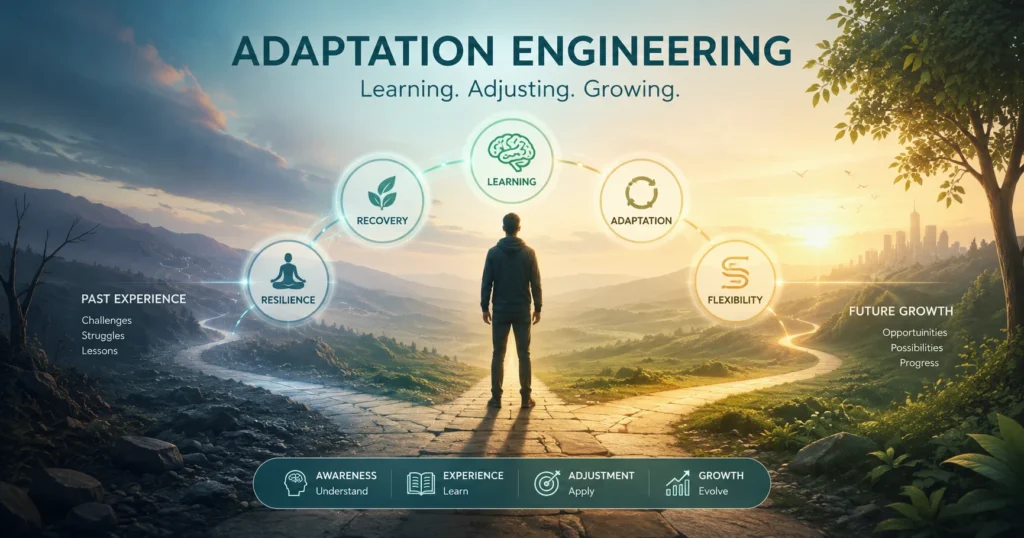
How Adaptation Engineering Appears in Daily Life
People adapt in many different ways. Someone may adjust to a new job. Another person may adapt to a different routine. Others may learn how to manage new responsibilities. In each case, learning develops over time. Small experiences build on one another. As a result, future situations often feel more familiar.
Adaptation Engineering helps explain this process. It explores how learning, recovery, habits, feedback, and daily experiences work together. Rather than focusing on one moment, it looks at how change develops over time. Therefore, it helps readers understand why growth usually happens step by step.
This topic is closely connected to Neuromodulation, Neuroplastic Adaptation, Recovery Capacity and Nervous System Resilience, and Nervous System Regulation. Together, these topics help explain how people learn, recover, adjust, and move forward. Because of these connections, Adaptation Engineering acts as a bridge between daily experience and long-term adaptation.
Many people expect change to happen quickly. However, adaptation often takes time. New patterns usually develop through repetition, learning, and experience. Some improvements may appear within days. Others may take weeks or months. Even so, small gains can build into meaningful progress over time.
The main idea is simple. People learn. People adjust. People grow. Adaptation Engineering helps explain how that process works and why it matters in everyday life.
Quick Navigation
- What Is Adaptation Engineering?
- Plain Meaning / Glossary Box
- How Adaptation Engineering Works
- Initial Formation of Adaptive Responses
- Key Layers of Adaptation Engineering
- Learning Layer of Adaptation Engineering
- Recovery Layer of Adaptation Engineering
- Behavioral Layer of Adaptation Engineering
- Environmental Layer of Adaptation Engineering
- Feedback Layer of Adaptation Engineering
- Real-Life Symptom Language Bridge
- Adaptation Engineering and Human Systems
- Adaptation Engineering Interactions
- Practical Daily-Life Examples
- Adaptation Engineering Visual Flow
- Why Adaptation Engineering Matters for Recovery
- Common Misunderstandings About Adaptation Engineering
- Related Condition Connections
- How Adaptation Engineering Connects With Other Nerve Health Pages
- Topic Cluster Placement
- Adaptation Engineering FAQ
- Continue Learning
- Sources / References
- Author / Editorial Trust Note
- Educational Trust Note
- Safety & Education Notice
Plain Meaning / Glossary Box
Plain Meaning
Adaptation Engineering is the process of learning, adjusting, and improving through experience. It explains how people respond to change and become more familiar with new situations over time.
Life does not stay the same. New responsibilities appear. Different environments create new demands. Unexpected challenges also arise. Because of this, the body and nervous system must continue adapting throughout life.
A simple way to understand Adaptation Engineering is to think about learning something new. At first, the activity may feel difficult. However, practice creates experience. Experience creates learning. Then learning helps improve future responses. As a result, the same task often becomes easier over time.
Simple Definition
Adaptation Engineering is the study of how the body, brain, and nervous system learn from experience and adjust to future situations.
Simple Example
Imagine moving to a new city. During the first few weeks, roads may seem confusing. Daily routines may require extra effort. New locations may be difficult to remember.
Over time, familiarity begins to grow. Roads become easier to recognize. Routines feel more natural. Less effort is needed to navigate daily life. The city did not change very much. Instead, the person adapted to the environment.
This simple example shows how Adaptation Engineering works in everyday life.
Key Idea
The key idea is simple.
People learn through experience.
Over time, they adjust to change.
As a result, growth becomes possible.
Adaptation does not usually happen overnight. Instead, it develops through learning, repetition, recovery, feedback, and time. Therefore, Adaptation Engineering helps explain how long-term change becomes possible.
Quick Glossary
Adaptation – Adjusting to new situations, experiences, or demands.
Learning – Gaining knowledge or skills through experience and practice.
Feedback – Information that helps guide future improvement.
Recovery – Periods of rest and restoration that support future adaptation.
Resilience – The ability to continue moving forward through challenges and change.
Adjustment – Small changes made in response to new information or experience.
What Is Adaptation Engineering?
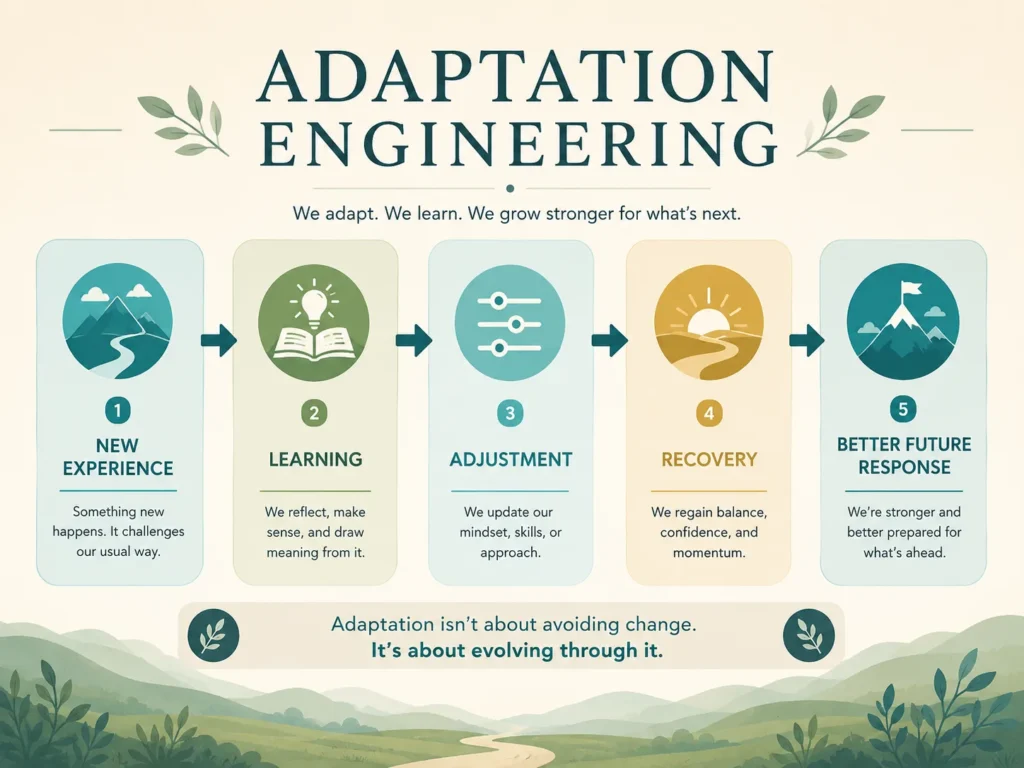
Adaptation Engineering is the study of how people adjust to change over time. Life is always changing. New experiences appear. New demands arrive. Different situations require different responses. Because of this, the body and nervous system must continue learning and adjusting throughout life.
Many people think adaptation happens automatically. While some adjustment does happen naturally, adaptation often follows a pattern. First, a person experiences something new. Next, the nervous system gathers information. Then learning begins. Over time, repeated experience may create a more effective response. Therefore, adaptation is often a gradual process rather than an instant event.
Adaptation Engineering helps explain why people become more comfortable with familiar situations. It also helps explain why new situations may feel difficult at first. Instead of viewing adaptation as a mystery, this topic explores the steps that help change happen over time.
Understanding Adaptation Engineering in Simple Terms
A simple way to understand Adaptation Engineering is to think about learning to ride a bicycle. During the beginning, balance may feel difficult. Steering may feel awkward. Confidence may also be low. However, practice creates experience. Experience creates learning. Then learning helps improve future performance.
The same pattern appears in many areas of life. A new job may feel challenging. A new schedule may require adjustment. A new responsibility may take time to understand. Even so, repeated experience often helps people become more comfortable. Therefore, adaptation can be viewed as a learning process that develops through time.
Another important point is that adaptation does not mean perfection. Instead, it means becoming more familiar with a situation. As a result, the nervous system may need less effort to handle similar experiences in the future.
How Adaptation Engineering Appears in Daily Life
Adaptation Engineering can be seen almost everywhere. Students adapt to new classes. Workers adapt to new responsibilities. Parents adapt to family changes. Athletes adapt to training demands. Even simple daily routines often involve adaptation.
For example, moving to a new neighborhood may feel stressful during the beginning. New roads, new landmarks, and new routines may require extra attention. After several weeks, navigation often feels easier. The environment may not have changed very much. Instead, the person has adapted to it.
A similar process happens when learning technology, building habits, or developing skills. At first, extra effort may be needed. Later, the same activity may feel more natural. Therefore, adaptation plays an important role in everyday life.
Why Adaptation Engineering Is Important
Adaptation helps people respond to change. Without adaptation, learning would be much harder. Daily life would also require more effort. Because of this, adaptation supports growth, learning, flexibility, and resilience.
In addition, adaptation helps people prepare for future situations. Each experience provides information. Then that information may influence future responses. Over time, these experiences can create valuable learning patterns.
Most importantly, Adaptation Engineering helps explain why progress often takes time. Many people expect immediate results. However, meaningful adaptation usually develops through repeated experience, recovery, and learning. Therefore, understanding adaptation may help create more realistic expectations about change and growth.
How Adaptation Engineering Works
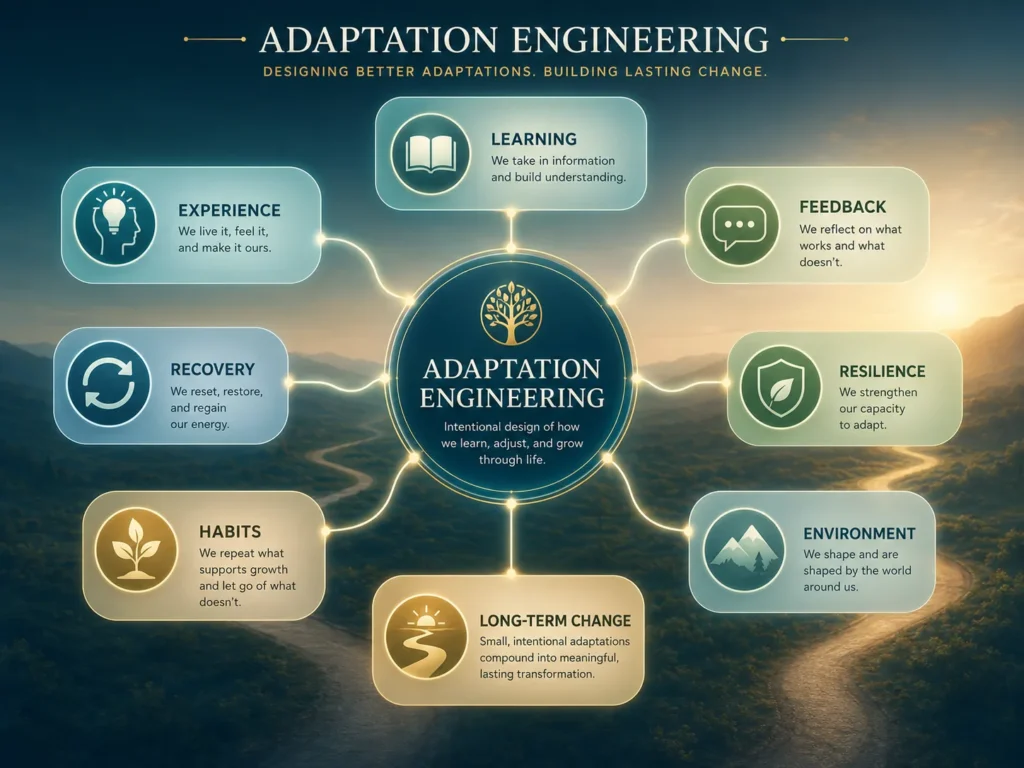
Adaptation Engineering works through a cycle of experience, learning, adjustment, and feedback. The cycle begins when a person encounters a new situation. This situation may involve learning a skill, facing a challenge, changing a routine, or entering a new environment.
During the beginning, the nervous system collects information. It notices what is happening and tries to understand what matters most. Because the situation is unfamiliar, extra attention may be required. As a result, the experience may feel more demanding than familiar activities.
After repeated exposure, learning begins to develop. The nervous system starts recognizing patterns. Certain responses become more familiar. Then future situations may require less effort. Therefore, adaptation often becomes easier as experience grows.
Experience Creates Information
Every adaptation process begins with experience. Without experience, there is nothing new to learn. Therefore, experience acts as the starting point for adaptation.
Some experiences are simple. Others are complex. However, each experience provides information. The nervous system uses this information to understand the environment and guide future responses.
For example, a person learning public speaking may feel nervous during the first presentation. After several presentations, the situation may feel more familiar. This change happens because experience provides information that supports learning.
Learning Creates Change
Learning is one of the most important parts of adaptation. Once information is collected, the nervous system begins to organize that information. Then future responses may change based on what has been learned.
This change is often gradual. Small improvements may appear before large improvements. Because of this, adaptation is usually easier to see over weeks or months rather than days.
Learning does not always remove challenges. However, it may help people respond differently to those challenges. Therefore, learning remains a key part of Adaptation Engineering.
Recovery Supports Adaptation
Learning and adaptation require energy. Because of this, recovery plays an important role. Sleep, rest, and recovery periods give the body and nervous system time to restore resources.
Without recovery, adaptation may become more difficult. Therefore, adaptation is not only about effort. It is also about allowing time for restoration.
A simple example can be seen in physical training. Exercise creates demand. Recovery supports future performance. In a similar way, recovery helps support nervous system adaptation.
Adaptation Takes Time
One of the most important ideas in Adaptation Engineering is that change usually takes time. New patterns rarely appear overnight. Instead, they develop through repeated experience and learning.
Some changes may happen quickly. Others may require weeks, months, or longer. Therefore, adaptation should be viewed as a process rather than a single event.
This understanding can help create realistic expectations. Progress may feel slow at times. However, small changes can build over time. As a result, long-term adaptation often develops through many small steps rather than one large change.
Initial Formation of Adaptive Responses
Adaptive responses often begin when a person encounters something new. This could be a new environment, a new responsibility, a new habit, or a new challenge. During the beginning, the situation may feel unfamiliar. Because of this, the body and nervous system often need extra attention and energy to understand what is happening.
At first, people may feel uncertain. They may need more time to think, learn, or respond. This is normal. The nervous system is collecting information and looking for patterns. Therefore, early adaptation often requires more effort than later adaptation.
As experience increases, familiarity begins to grow. Certain situations become easier to recognize. Responses become more organized. As a result, less effort may be needed in the future. This gradual shift forms the foundation of adaptive responses.
Why New Situations Feel Different
New situations often require learning. The nervous system cannot rely fully on previous experience because the situation is unfamiliar. Therefore, more attention may be directed toward understanding what is happening.
For example, the first day at a new workplace may feel very different from the hundredth day. During the beginning, people may focus on names, locations, schedules, and expectations. Later, many of these details become familiar. As a result, the environment often feels easier to manage.
This process does not mean challenges disappear. Instead, it means the nervous system becomes more familiar with the situation. Therefore, adaptation often reduces uncertainty rather than removing all difficulty.
The Role of Repetition
Repetition plays an important role in adaptation. A single experience may provide information. However, repeated experiences often strengthen learning. Because of this, many adaptive responses develop through practice and repetition.
Think about learning to drive a car. During the beginning, many actions require conscious attention. Steering, mirrors, signals, and traffic may all compete for focus. Later, many of these actions become more familiar. Therefore, the person may feel more confident and comfortable.
This example helps show how repetition supports adaptation over time.
Key Layers of Adaptation Engineering
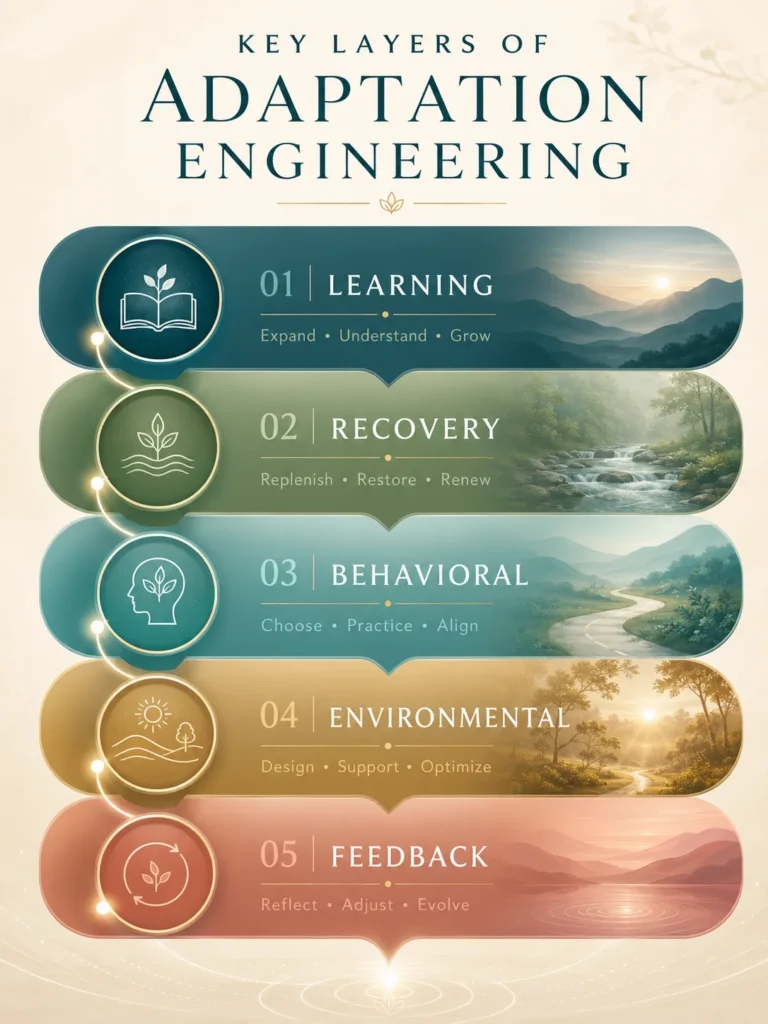
Adaptation Engineering includes several connected layers. These layers help explain how learning, recovery, behavior, and environment work together to support change. Although each layer has a different role, they constantly influence one another.
For example, learning may influence behavior. Behavior may influence recovery. Recovery may affect future learning. Because of these connections, adaptation is best viewed as a whole-system process rather than a single event.
Understanding these layers can make adaptation easier to understand. Instead of focusing on one factor, readers can see how many different parts work together. Therefore, the following layers provide a useful framework for understanding long-term adaptation.
Learning Layer of Adaptation Engineering
The learning layer focuses on how experience creates change. Every day, people collect information from the world around them. Some experiences are small. Others are more significant. However, each experience provides an opportunity to learn.
Learning does not always happen in a classroom. People learn through conversations, work, relationships, challenges, routines, and daily activities. Because of this, learning is constantly shaping adaptation.
Over time, the nervous system begins to recognize patterns. Familiar patterns often require less effort than unfamiliar patterns. As a result, learning helps support more efficient responses in the future.
Learning Through Practice
Practice is one of the most common forms of learning. Repeated exposure helps strengthen familiarity. Therefore, practice often plays an important role in adaptation.
For example, a person learning a new language may struggle during the beginning. Vocabulary may feel difficult to remember. Conversations may feel slow. However, repeated practice often improves understanding.
This improvement happens because learning builds gradually. Small gains accumulate over time. Therefore, practice remains one of the most powerful tools for adaptation.
Learning Through Experience
Experience provides information that cannot always be gained from reading alone. Real-world situations often create opportunities for observation, adjustment, and growth.
For example, someone may read about public speaking. However, standing in front of an audience provides a different type of learning experience. Therefore, direct experience often contributes to adaptation in unique ways.
Because of this, experience remains one of the core foundations of Adaptation Engineering.
Recovery Layer of Adaptation Engineering
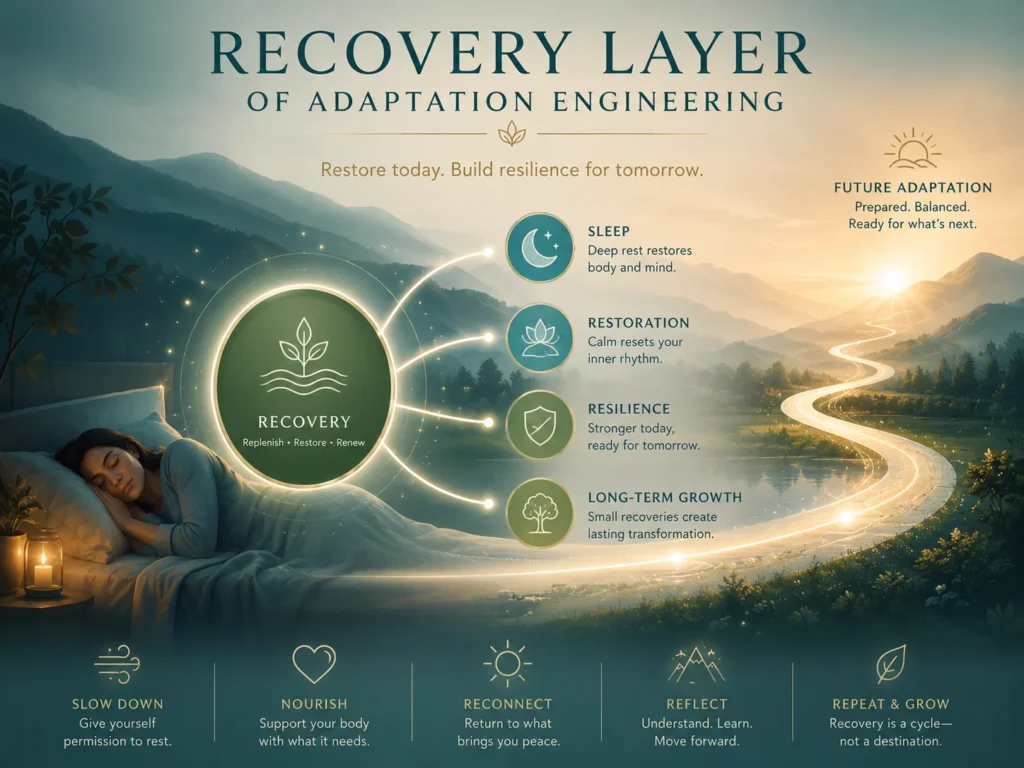
Adaptation requires recovery. Learning requires recovery. Growth requires recovery. Therefore, the recovery layer plays an important role in long-term change.
Many people focus only on effort. However, effort is only part of the picture. Recovery provides time for restoration. During recovery, the body and nervous system can prepare for future demands.
This is why recovery should not be viewed as inactivity. Instead, it is an active part of adaptation. Without recovery, long-term adjustment may become more difficult.
Why Recovery Supports Adaptation
Recovery helps restore resources. After periods of effort, the body and nervous system benefit from periods of rest. Therefore, recovery often supports future performance.
Sleep provides one example. Quiet time provides another. Healthy routines may also contribute to recovery. Because recovery supports restoration, it helps create conditions that allow adaptation to continue.
As a result, recovery and adaptation often work together rather than separately.
Recovery and Long-Term Growth
Long-term growth usually involves a balance between effort and recovery. Too much effort without recovery may create challenges. On the other hand, recovery without learning opportunities may limit growth.
Therefore, adaptation often develops through a combination of action and restoration. This balance helps explain why recovery remains an important layer of Adaptation Engineering.
Behavioral Layer of Adaptation Engineering
The behavioral layer focuses on actions. It looks at what people do each day. Habits, routines, choices, and daily activities all belong to this layer.
Behavior matters because actions create experience. Experience creates learning. Then learning influences future behavior. Because of this cycle, behavior plays a central role in adaptation.
Many changes begin with small actions. These actions may seem unimportant during the beginning. However, repeated actions often create larger patterns over time. Therefore, behavior can have a powerful influence on adaptation.
Habits and Adaptation
Habits help reduce the effort needed for daily tasks. Once a habit becomes familiar, less conscious attention may be required. Because of this, habits can support efficiency and consistency.
For example, a morning routine may feel difficult during the beginning. After several weeks, the same routine may feel natural. This change happens because repeated behavior creates familiarity.
As a result, habits provide a clear example of how adaptation develops through daily action.
Small Actions Create Large Changes
Many people focus on large goals. However, adaptation often develops through small actions repeated consistently. Therefore, small steps should not be underestimated.
Reading a few pages each day, practicing a skill regularly, or following a routine may seem minor. Yet these actions can create meaningful change over time. Because of this, small behaviors often play a major role in long-term adaptation.
Environmental Layer of Adaptation Engineering
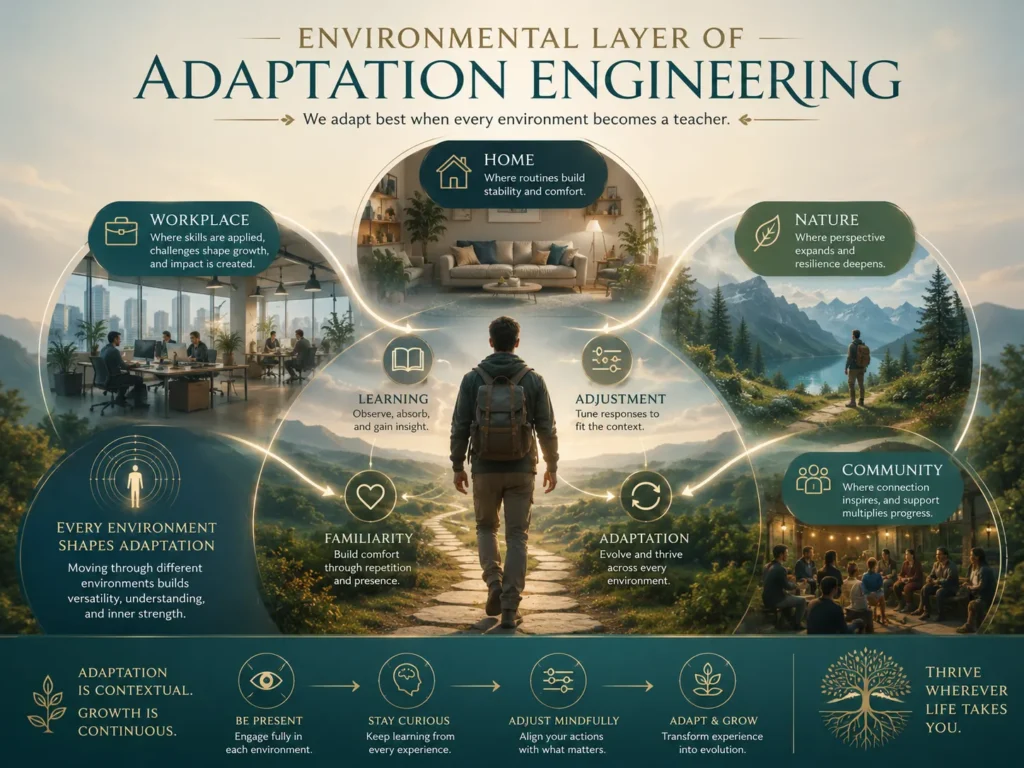
The environmental layer focuses on the world around us. Every person lives in an environment filled with people, places, routines, sounds, responsibilities, and daily experiences. Because the nervous system constantly receives information from the environment, surroundings can influence adaptation in many ways.
For example, a quiet room feels different from a crowded market. A familiar place feels different from a new location. Likewise, a supportive environment may feel different from a stressful one. As a result, surroundings can affect attention, learning, comfort, and behavior.
The environment does not control adaptation by itself. However, it can influence the conditions in which adaptation takes place. Therefore, the environmental layer helps explain why some situations feel easier to adjust to than others.
Everyday Environmental Influences
Many environmental influences seem small. However, they can still affect daily experience. Noise, lighting, schedules, workload, social interaction, and physical surroundings all provide information to the nervous system.
For example, some people focus better in quiet spaces. Others work well with gentle background activity. Similarly, some people adapt quickly to change, while others need more time. Because environments differ, adaptation may also look different from person to person.
These differences do not mean one environment is always better than another. Instead, they show how surroundings can influence learning and adjustment.
Environment and Long-Term Adaptation
Long-term adaptation often involves becoming familiar with an environment. During the beginning, a new place may require extra attention. New routines may feel demanding. New expectations may feel uncertain.
Over time, familiarity often develops. The nervous system learns patterns and recognizes what is important. As a result, the environment may require less effort to navigate. This process helps explain why many situations become easier with experience.
Feedback Layer of Adaptation Engineering
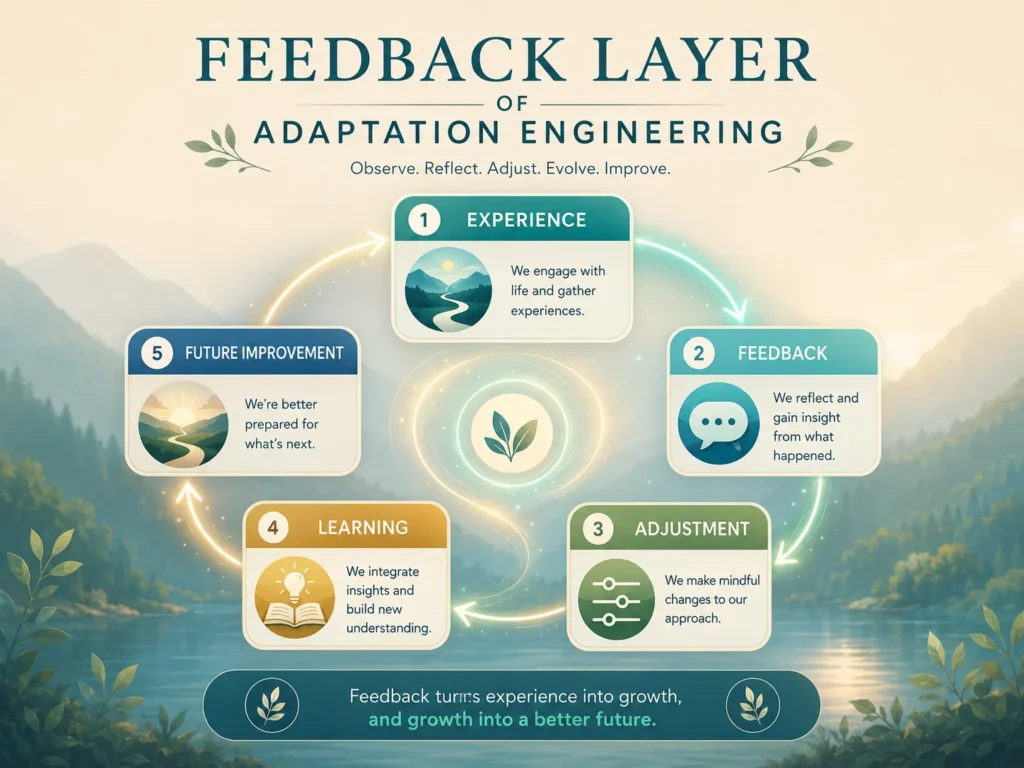
The feedback layer is one of the most important parts of Adaptation Engineering. Feedback provides information about what is working and what may need adjustment. Without feedback, learning becomes much more difficult.
Feedback appears in many forms. Sometimes it comes from personal experience. Sometimes it comes from results. Other times it comes from observation, reflection, or communication. Because of this, feedback helps guide future decisions and actions.
A simple example can be seen when learning a skill. If a person notices improvement, that information becomes feedback. If a mistake occurs, that information also becomes feedback. Therefore, both success and difficulty can support adaptation.
Why Feedback Matters
Feedback helps reduce uncertainty. It provides information that can guide future action. As a result, people can make adjustments based on experience rather than guesswork.
For example, a student may receive feedback after completing an assignment. An athlete may receive feedback during training. A worker may receive feedback while learning a new task. In each case, feedback helps support learning.
Because adaptation depends on learning, feedback often becomes one of the key drivers of long-term improvement.
Feedback Creates Adjustment
Feedback alone is not enough. The information must be used. When people apply feedback, adjustment becomes possible. Then future responses may change.
This process often repeats many times. Experience creates feedback. Feedback creates adjustment. Adjustment creates new experience. Therefore, adaptation develops through an ongoing cycle rather than a single event.
As a result, feedback remains one of the most valuable tools for learning and growth.
Real-Life Symptom Language Bridge
Many people search for adaptation-related topics because they notice changes in daily life. Some may feel overwhelmed by new situations. Others may struggle with unfamiliar routines. Another person may notice that learning a new skill takes more effort than expected.
These experiences can feel frustrating. However, they are often part of normal adaptation. New situations usually require learning. Learning often requires time. Therefore, temporary difficulty does not always mean something is wrong.
For example, a person may say, “I need time to get used to new environments.” Someone else may say, “I feel more comfortable after I practice.” Another person may notice that unfamiliar situations require extra focus. These experiences often reflect adaptation in action.
Understanding Adaptation-Related Experiences
Adaptation can influence many areas of daily life. Attention, learning, confidence, routines, and performance may all change during periods of adjustment. Because of this, people often notice adaptation before they understand what is happening.
A new responsibility may feel stressful during the beginning. A new skill may seem difficult. Even simple changes may require effort. However, familiarity often develops over time. As a result, the same activity may eventually feel easier.
This educational perspective can help readers understand why adaptation is often a process rather than an instant outcome.
Important Educational Note
Adaptation Engineering is an educational topic. It does not diagnose medical conditions. Symptoms can have many causes. Therefore, adaptation should never be used as the only explanation for health concerns.
If symptoms are severe, unusual, worsening, or disruptive, professional medical evaluation is important. This page is designed to support learning rather than diagnosis.
Adaptation Engineering and Human Systems
Adaptation Engineering connects with many Human Systems topics. This is because learning, behavior, emotions, motivation, and recovery all influence adaptation. Rather than working alone, these systems often interact with one another.
For example, motivation may influence effort. Effort may influence learning. Learning may influence confidence. Confidence may influence future behavior. Because these connections exist, adaptation often develops through many related processes.
Understanding these connections helps create a broader view of change. Instead of looking at one factor alone, readers can see how multiple systems contribute to adaptation.
Emotional Regulation and Adaptation Engineering
Emotional Regulation can influence how people respond to challenges. Emotions often affect attention, decision-making, and behavior. Therefore, emotional awareness may support adaptation.
For example, a person who understands their emotional responses may be better prepared to adjust during difficult situations. As a result, emotional learning often becomes part of the adaptation process.
Stress & Coping and Adaptation Engineering
Stress is a normal part of life. Because challenges appear regularly, people often need coping skills. These skills can influence how individuals respond to changing demands.
Over time, experience may improve coping abilities. Therefore, Stress & Coping topics connect naturally with Adaptation Engineering.
Behavior Change and Adaptation Engineering
Behavior Change focuses on actions and habits. Adaptation often develops through repeated actions. Because of this, behavior change and adaptation frequently work together.
Small actions may seem unimportant during the beginning. However, repeated behaviors often create meaningful change over time. Therefore, behavior remains an important part of adaptation.
Motivation and Adaptation Engineering
Motivation helps direct effort and attention. People often spend more time on activities that feel meaningful or important. Because of this, motivation can influence learning and adaptation.
Even small amounts of motivation can support progress. Therefore, motivation often helps drive long-term change.
Adaptation Engineering Interactions
Adaptation Engineering is not a single process. Instead, it involves many interactions between learning, behavior, recovery, feedback, environment, and experience. Each part influences the others.
For example, learning may change behavior. New behavior may create new experiences. Those experiences may produce feedback. Then feedback may guide future learning. Because of these interactions, adaptation develops through connected cycles.
Understanding these relationships helps explain why change is often gradual. Progress usually comes from many small adjustments working together over time. Therefore, adaptation is best viewed as an ongoing process rather than a final destination.
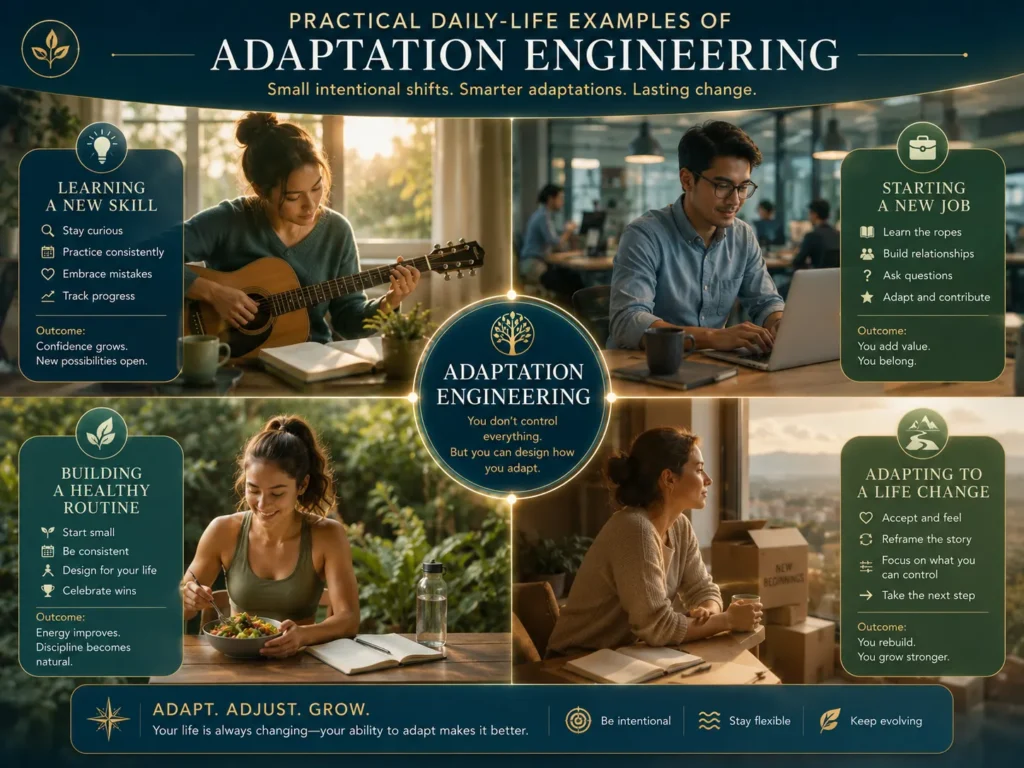
Practical Daily-Life Examples
Adaptation Engineering becomes easier to understand when we look at everyday life. Most people experience adaptation regularly, even if they never use the word adaptation. New situations appear. New skills are needed. New challenges arise. As a result, the body and nervous system must continue adjusting.
These examples show how adaptation often develops through repeated experience rather than sudden change. Therefore, they help explain why progress usually happens step by step.
Learning a New Skill
Learning a new skill often feels difficult during the beginning. A person learning a language may forget words. Someone learning a musical instrument may make mistakes. Likewise, a person learning computer software may need extra time to complete simple tasks.
However, practice creates familiarity. Familiarity creates confidence. Then confidence may support future learning. Because of this process, the same activity often feels easier after weeks or months of experience.
This example shows how adaptation develops gradually. The skill does not change. Instead, the person’s response changes through learning and repetition.
Starting a New Job
A new job often requires adaptation. New coworkers, new routines, and new expectations may feel overwhelming at first. During the beginning, extra attention is often required.
As time passes, familiarity grows. The employee learns procedures, understands responsibilities, and becomes more comfortable with daily tasks. As a result, the same environment may feel less demanding.
This example demonstrates how adaptation can reduce uncertainty through experience and learning.
Building a Healthy Routine
Many people try to build new routines. Some want to exercise regularly. Others want to improve sleep habits or manage time more effectively.
At first, a new routine may require conscious effort. Reminders may be necessary. Motivation may also vary from day to day. Even so, repetition often strengthens the routine over time.
Because repeated actions create familiarity, routines may eventually require less effort. Therefore, habits provide a practical example of long-term adaptation.
Adjusting to Life Changes
Life changes often require adaptation. Moving to a new city, becoming a parent, starting school, or entering retirement can all create new demands.
Initially, these changes may feel unfamiliar. New responsibilities may require learning. New environments may require adjustment. However, experience often helps people become more comfortable.
As a result, many life transitions illustrate how adaptation supports resilience and flexibility.
Adaptation Engineering Visual Flow
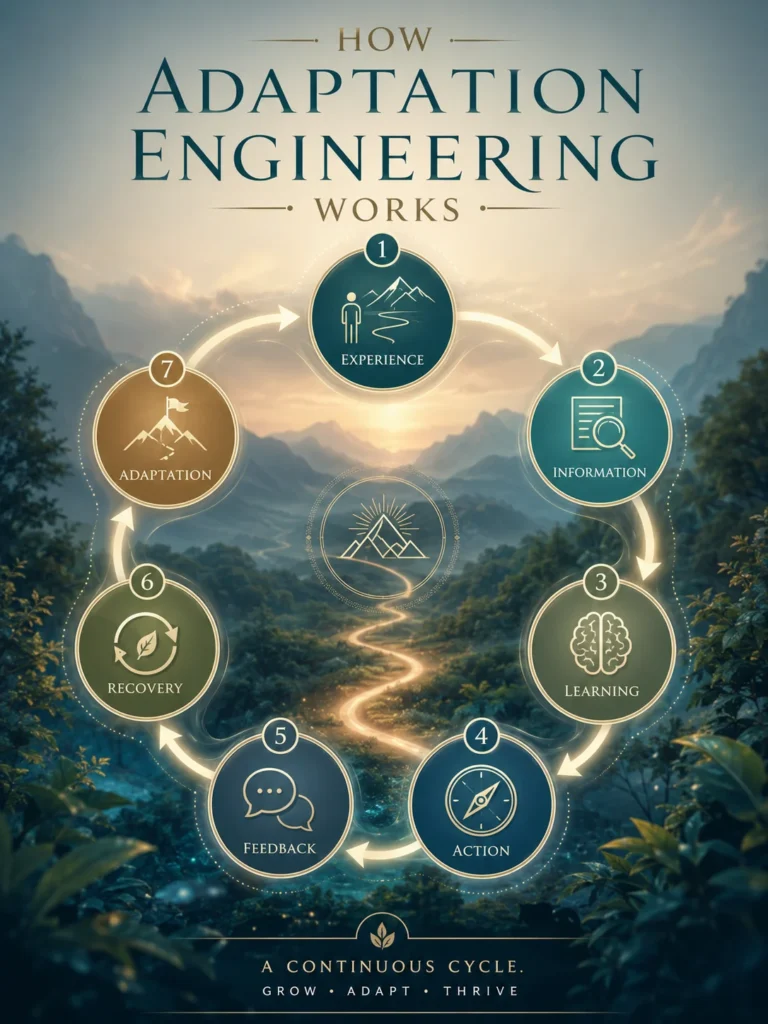
Adaptation Engineering can be understood as a repeating cycle. Experiences provide information. Information supports learning. Learning influences behavior. Behavior creates new experiences. Then the cycle continues.
Rather than moving in a straight line, adaptation often develops through repeated feedback and adjustment. Because of this, small changes may accumulate over time and create larger improvements.
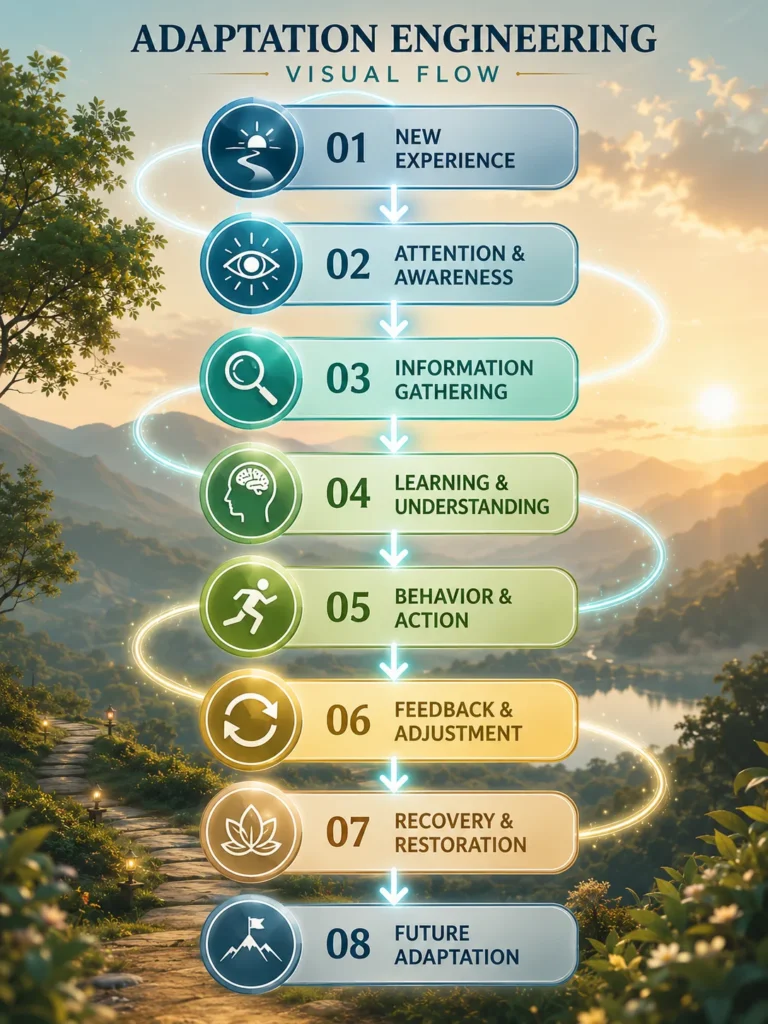
New Experience
↓
Attention and Awareness
↓
Information Gathering
↓
Learning and Understanding
↓
Behavior and Action
↓
Feedback and Adjustment
↓
Recovery and Restoration
↓
Future Adaptation
This flow helps explain why adaptation often takes time. Each stage supports the next stage. Therefore, meaningful change usually develops through many connected steps.
Why Adaptation Engineering Matters for Recovery
Recovery is often linked to healing, restoration, and resilience. However, recovery also involves adaptation. After all, people must often adjust to changing circumstances, new challenges, and different demands.
Because of this connection, Adaptation Engineering plays an important role in recovery education. It helps explain how learning, experience, and feedback may support future responses.
Recovery does not always mean returning to a previous state. In some situations, recovery may involve developing new skills, new habits, or new ways of responding. Therefore, adaptation often becomes part of the recovery process.
Recovery Creates Opportunity for Adaptation
Periods of recovery often provide time for reflection and adjustment. During these periods, people may evaluate experiences, notice patterns, and develop new approaches.
This does not mean recovery happens instantly. Instead, recovery often creates conditions that support future learning. As a result, adaptation and recovery frequently work together.
Adaptation Supports Long-Term Resilience
Resilience involves responding to challenges and continuing forward. Adaptation helps support this ability because it allows people to learn from experience.
Each challenge may provide information. Each experience may provide feedback. Over time, these experiences may strengthen future responses. Therefore, adaptation often contributes to long-term resilience.
Why This Topic Matters
Many people focus on results. However, adaptation focuses on process. Understanding the process can help create realistic expectations about learning, recovery, and growth.
As a result, Adaptation Engineering provides a useful framework for understanding long-term change.
Common Misunderstandings About Adaptation Engineering
Adaptation Engineering is sometimes misunderstood because the name sounds technical. As a result, people may assume it refers only to science, technology, or specialized systems.
However, the core idea is simple. Adaptation Engineering helps explain how people learn, adjust, and respond to change over time.
Misunderstanding 1: Adaptation Happens Instantly
Many people expect rapid change. However, meaningful adaptation often takes time. Learning usually develops through repeated experience rather than a single event.
Therefore, gradual progress should be viewed as a normal part of adaptation.
Misunderstanding 2: Adaptation Means Perfection
Adaptation does not mean becoming perfect. Instead, it means becoming more familiar, more flexible, and more capable of responding to situations.
Because of this, adaptation should be viewed as improvement rather than perfection.
Misunderstanding 3: Adaptation Only Happens During Major Events
Adaptation occurs during large changes and small changes. A new habit, a new skill, or a new routine can all create opportunities for adaptation.
Therefore, adaptation is part of everyday life rather than a rare event.
Misunderstanding 4: Recovery and Adaptation Are Separate
Some people think recovery and adaptation are unrelated. In reality, they often support one another.
Recovery helps restore resources. Adaptation helps improve future responses. Together, they contribute to long-term resilience.
Misunderstanding 5: Everyone Adapts in the Same Way
People have different experiences, environments, and learning histories. Because of this, adaptation may look different from one person to another.
Different paths can still lead to meaningful growth and learning.
Related Condition Connections
Some readers explore Adaptation Engineering while learning about nerve-related conditions. Others discover the topic while researching recovery, resilience, learning, or nervous system function.
These connections do not mean Adaptation Engineering causes a condition. They also do not mean adaptation explains every symptom. Instead, they help readers understand how adaptation may fit into a broader educational framework.
Related educational condition pages include:
• Peripheral Neuropathy
• Diabetic Neuropathy
• Nerve Compression
• Sciatic Nerve Pain
• Post-Injury Nerve Damage
Each condition has its own causes, risk factors, and health considerations. Therefore, these topics should be viewed as separate educational resources.
Why These Connections Matter
People often learn more effectively when topics connect with one another. A reader may begin with a condition page and later explore adaptation. Another reader may start with recovery and later learn about resilience.
Because of this, educational connections can help create a broader understanding of nervous system health and recovery topics.
How Adaptation Engineering Connects With Other Nerve Health Pages
Adaptation Engineering does not exist by itself. Instead, it connects with many other topics across the Heal Your Nerves Naturally learning framework. This is because adaptation influences learning, recovery, behavior, resilience, and nervous system function.
For example, Neuromodulation explains how the nervous system adjusts its responses. Neuroplastic Adaptation explores how learning can influence nervous system pathways over time. Meanwhile, Recovery Capacity and Nervous System Resilience focuses on flexibility and restoration after periods of demand.
These topics are connected because they all involve change. However, each page explores a different part of the process. As a result, readers can build a more complete understanding of adaptation by exploring related pages.
Connections With Human Systems
Human Systems topics also connect closely with Adaptation Engineering. For example, Emotional Regulation explores how feelings influence daily life. Stress & Coping examines responses to challenges. Likewise, Behavior Change focuses on habits and actions.
These topics influence adaptation because people learn through experience. Emotions, behavior, and coping skills all affect how new situations are handled. Therefore, adaptation often develops through the interaction of multiple systems rather than a single factor.
Connections With Recovery Systems
Recovery Systems provide another important connection. Recovery Cycles, Integration and Stability, and Resilience all help explain how adaptation develops over time.
Learning often creates demand. Recovery helps support restoration afterward. Then future adaptation becomes possible. Because of this relationship, recovery and adaptation are closely connected throughout the learning process.
Topic Cluster Placement
Within the Heal Your Nerves Naturally educational framework, Adaptation Engineering belongs primarily within the Recovery Engineering cluster.
This topic acts as a bridge between learning, feedback, recovery, resilience, and long-term adjustment. Because of this role, it connects naturally with multiple systems across the site.
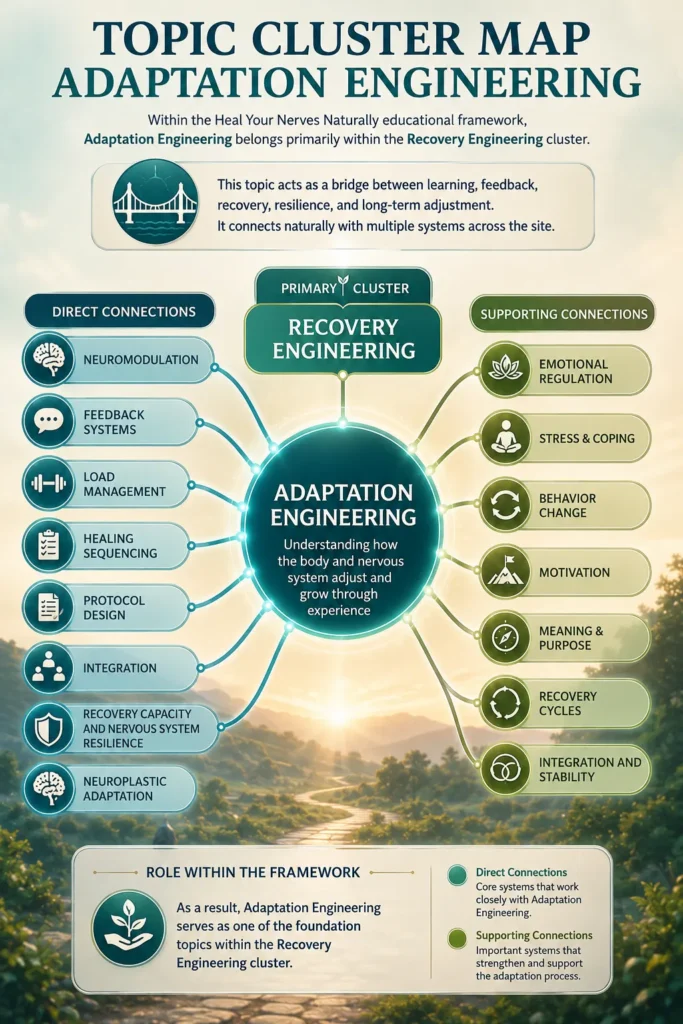
Primary Cluster
Direct Connections
• Recovery Capacity and Nervous System Resilience
Supporting Connections
As a result, Adaptation Engineering serves as one of the foundation topics within the Recovery Engineering cluster.
Adaptation Engineering FAQ
What is Adaptation Engineering?
Adaptation Engineering is the study of how people adjust to change over time. It explores how learning, experience, recovery, and feedback influence future responses.
Why is Adaptation Engineering important?
It helps explain how people learn new skills, build habits, respond to challenges, and adapt to changing situations.
Does adaptation happen throughout life?
Yes. People continue learning and adjusting throughout life. Because of this, adaptation remains important at every age.
How does adaptation begin?
Adaptation often begins when a person encounters a new experience. The nervous system gathers information, looks for patterns, and gradually develops familiarity.
Why does adaptation take time?
Most adaptation develops through repeated experience. Therefore, meaningful change usually happens gradually rather than instantly.
Does recovery support adaptation?
Yes. Recovery provides time for restoration and preparation. As a result, recovery often supports future learning and adjustment.
What role does feedback play?
Feedback provides information about what is working and what may need adjustment. Therefore, feedback helps guide future responses.
Are habits connected to adaptation?
Yes. Repeated actions create repeated experiences. Over time, these experiences can support learning and adaptation.
Can the environment influence adaptation?
Yes. Surroundings, routines, social interactions, and daily demands can all affect adaptation.
Is Adaptation Engineering a medical treatment?
No. This page discusses Adaptation Engineering as an educational concept. It focuses on learning, adjustment, and long-term adaptation.
Does adaptation mean perfection?
No. Adaptation means becoming more familiar and flexible. It does not mean becoming perfect.
How does Adaptation Engineering relate to resilience?
Adaptation helps people learn from experience and adjust to change. Therefore, it often supports long-term resilience.
Continue Learning
Adaptation Engineering is only one part of the larger learning journey. The topics below explore related areas such as nervous system adaptation, recovery, resilience, behavior change, feedback, and long-term growth. Together, these pages can help build a broader understanding of how learning, adjustment, and recovery work across everyday life.
To continue exploring related topics, consider reading:
• Recovery Capacity and Nervous System Resilience
Together, these topics help explain how learning, recovery, resilience, adaptation, and long-term change work across many areas of life.
Sources / References
The information presented on this page is based on educational concepts from neuroscience, psychology, human adaptation, learning science, recovery research, and nervous system education. To support accuracy and provide opportunities for further learning, the resources below were selected from trusted health, science, and educational organizations.
Readers who want to explore adaptation, recovery, resilience, nervous system function, and learning in greater depth may find these sources helpful. However, this page is intended as an educational overview rather than a scientific review or medical guideline.
Recommended educational resources:
• National Institute of Neurological Disorders and Stroke (NINDS)
• National Institutes of Health (NIH)
• National Center for Biotechnology Information (NCBI)
• American Psychological Association (APA)
• Centers for Disease Control and Prevention (CDC)
These organizations provide educational information about learning, recovery, nervous system function, health, and human adaptation.
Author / Editorial Trust Note
This page was created as part of the Heal Your Nerves Naturally educational platform. The goal is to explain complex topics in clear and practical language that readers can understand.
Content is written for education and awareness. It is designed to help readers explore nervous system concepts without relying on technical language whenever simpler explanations are available.
Educational Trust Note
Adaptation is studied across neuroscience, psychology, education, human performance, rehabilitation, and behavioral science. Because research in these fields continues to grow, understanding also continues to evolve.
This page focuses on broad educational principles. The goal is to help readers understand adaptation, learning, recovery, and resilience within an accessible learning framework.
Safety & Education Notice
This page is for educational purposes only. It does not diagnose, treat, cure, or prevent any disease or medical condition.
Symptoms such as severe pain, major weakness, loss of function, unusual sensory changes, worsening symptoms, or significant emotional distress should be evaluated by qualified healthcare professionals.
Adaptation Engineering should be viewed as an educational topic that helps explain learning, adjustment, resilience, recovery, and long-term change. It should not be used as a substitute for professional medical advice, diagnosis, or treatment.